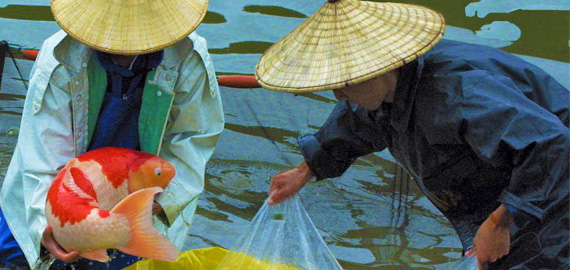

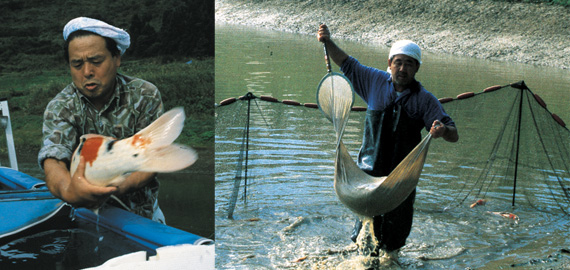
Koi fish are ornamental varieties of the common carp (Cyprinus carpio), originally bred in Japan for their vibrant colors and striking patterns. What began as simple mutations in wild carp evolved into a centuries-long tradition of selective breeding, transforming koi into living works of art.
The origins of modern koi trace back to the Niigata region of Japan in the early 1800s, where farmers began breeding carp for unique coloration. Over time, distinct varieties emerged—such as Kohaku (white with red markings), Taisho Sanke (white with red and black), and Showa (black with red and white)—each refined for balance, contrast, and beauty.
Koi are more than decorative fish—they carry deep cultural symbolism. Across many cultures, they represent perseverance, strength, and success, inspired by their ability to swim upstream against strong currents.
Some breeders played a pivotal role in shaping koi history. One notable figure, Sawata Aoki, helped develop metallic koi varieties like the Yamabuki Ogon in the early 20th century. Despite extreme hardship during World War II, he protected his koi, preserving bloodlines that still influence modern breeding today.
Today, koi can grow up to 3 feet long and live for decades, with some reaching 25–35 years or more under ideal conditions. Their longevity, beauty, and symbolism continue to make them one of the most admired ornamental fish in the world.